MineStar Terrain vs. MineStar Command for Dozing
MineStar Terrain vs. MineStar Command for Dozing: Choosing the Right Technology for Your Mine
Mining operations today demand more precision, higher productivity, and stronger safety measures than ever before. Cat® MineStar™ technology delivers on all three—but different solutions serve different purposes. Two of the most impactful technologies in today’s surface mining operations are MineStar Terrain and MineStar Command for Dozing. While both enhance efficiency and lower cost per ton, they do so in distinct ways.
This article breaks down how each system works, where each excels, and how mines can use them together to achieve maximum return on investment.
What is MineStar Terrain?
MineStar Terrain is a high‑precision machine guidance and productivity system designed to improve the accuracy, consistency, and efficiency of multiple mining processes—including dozing, drilling, loading, and grading.
Core Capabilities
MineStar Terrain provides:
- Real‑time machine tracking and positional guidance, showing operators exactly where they are relative to plan, grade, or dig boundaries.
- Accurate material placement, ensuring material goes to the right place the first time, reducing rework and process variation.
- Real‑time operator feedback, enabling ongoing corrections to improve productivity and material accuracy.
- Safety enhancements through avoidance zones and machine‑to‑machine awareness.
- Material tracking, including ore/waste identification and cycle recording for loaders and shovels.
Primary Value
Minestar Terrain is fundamentally about precision and production optimization. It helps mines:
- Move material accurately
- Reduce rework and survey time
- Maintain proper bench design
- Improve ore control
- Track productivity in real time
Terrain is ideal for operations wanting to increase efficiency through data-driven decision-making and operator guidance.
What is MineStar Command for Dozing?
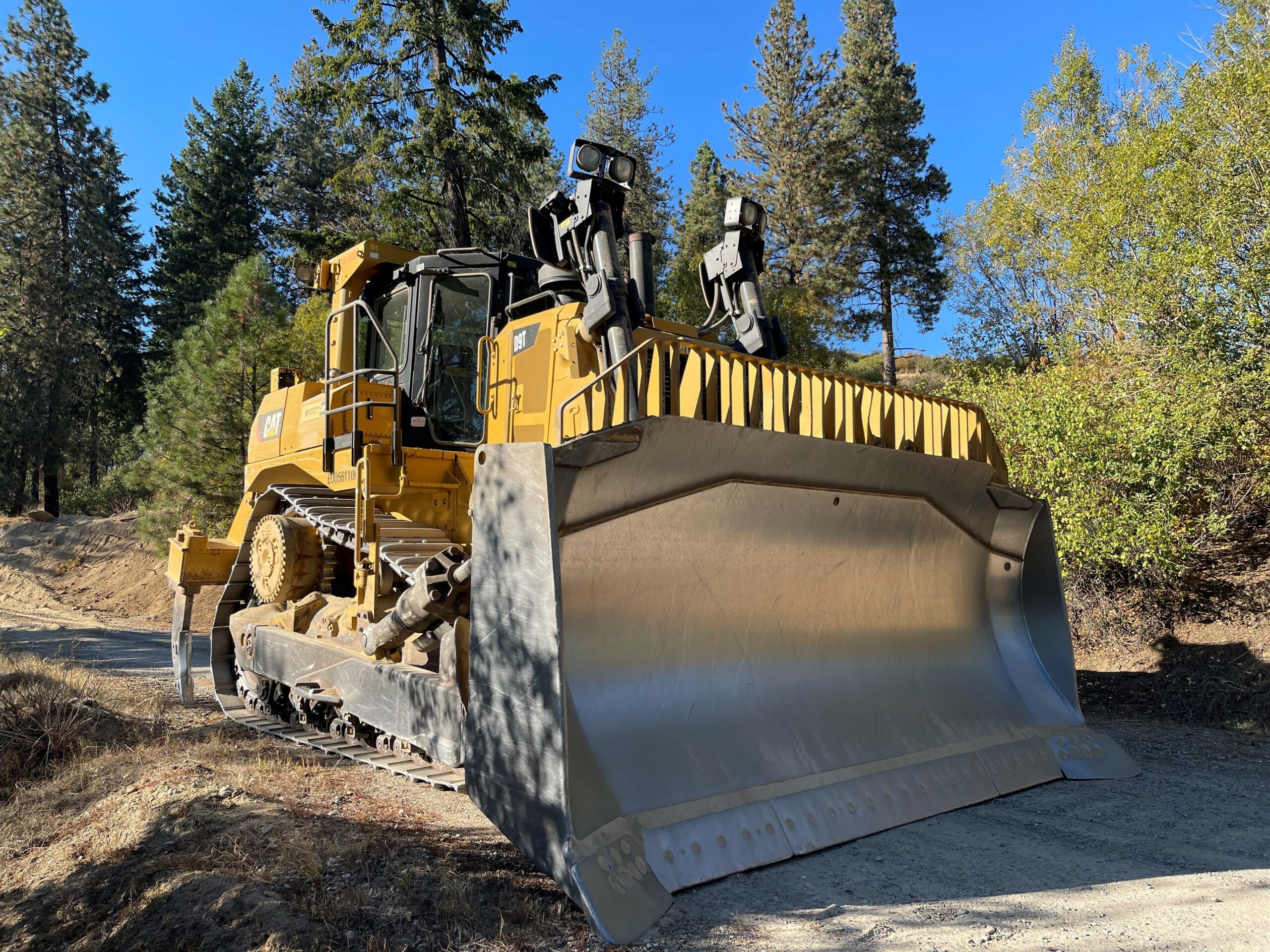
MineStar Command for Dozing is a remote control and semi‑autonomous dozing solution that dramatically improves safety and productivity by removing operators from hazardous environments.
Core Capabilities
Command for Dozing offers:
- Remote and non-line-of-sight operation, allowing operators to run dozers from safe nearby or remote locations.
- Semi-autonomous dozing, enabling a single operator to control up to four or even five machines at once, depending on configuration.
- Reduced operator exposure to noise, dust, vibration, weather, and ground hazards such as high-wall collapses.
- Deep machine integration that ensures smoother, more precise dozing performance.
- Consistency across shifts, increasing material moved per shift by 20–30% through stall reduction and automated control features.
Primary Value
Command for Dozing focuses on safety, efficiency, and continuous operation, helping mines:
- Improve dozing consistency
- Reduce risk of operator injury
- Maintain productivity in hazardous or post-blast areas
- Maximize machine utilization
- Operate more hours per shift due to reduced idle time
Key Differences at a Glance
| Category | MineStar Terrain | MineStar Command for Dozing |
| Primary Purpose | Precision machine guidance, production tracking | Remote & semi‑autonomous dozer operation |
| Focus Area | Accuracy, data, efficiency | Safety, operator removal from hazards, utilization |
| Machine Integration | Works with dozers, drills, loaders, graders | Primarily integrates with Cat dozers (D10, D11, and mining dozers) |
| Safety Benefits | Avoidance zones, awareness alerts | Removes operator from hazards entirely |
| Productivity Impact | Reduces rework, improves placement accuracy | Enables more shift hours, consistent operation, multi‑machine control |
| Operator Involvement | Operator stays in the cab | Operator controls machine remotely or via semi‑autonomous system |
| Data Use | High-value production reporting and planning | Operational safety, machine control, and automation |
How Minestar Terrain and Command Work Together
While powerful on their own, Terrain and Command become especially effective when used together:
- Terrain Blade Control feeds precise grade and material information into Command’s semi‑autonomous workflows, improving accuracy and dozing quality.
- Command operators rely on Terrain data to make real-time decisions remotely.
- Mines can achieve higher consistency, fewer operator errors, and more controlled material movement by pairing the two systems.
Caterpillar specifically notes that Minestar Terrain and Command are designed to integrate, forming part of the MineStar ecosystem that scales from guidance to semi-autonomous or fully autonomous operations.
Which Solution is Right for You?
Choose MineStar Terrain if you want to:
- Improve accuracy and reduce rework
- Optimize material movement and bench design
- Strengthen production tracking
- Enhance operator performance with real-time feedback
Opt for MineStar Command for Dozing if you need to:
- Remove operators from hazardous areas
- Increase dozer utilization and uptime
- Perform dozing in dangerous or post-blast environments
- Reduce operator fatigue and standardize dozing quality
- Scale toward semi-autonomous mine operations
Choose Both if you want to:
- Maximize precision and automation
- Improve safety and productivity simultaneously
- Build a future-ready mining operation that leverages high-level autonomy
Conclusion
MineStar Terrain and MineStar Command for Dozing tackle two different—yet complementary—challenges in mining. Terrain ensures your operation is precise, efficient, and data-driven, while Command ensures your operations are safe, consistent, and capable of running even when conditions aren’t safe for operators. Together, they help mines unlock significant production gains, reduce costs, and set the stage for an autonomous future.