POWER SYSTEM COMPONENTS
|
All
Power System Components Explained: How Generator Sets, ATS Units, Remote Monitoring & Paralleling Switchgear Work Together
When you invest in a backup power solution you’re deploying a complete network of power system components designed to work together seamlessly. Each component has a specific role, and when properly integrated, they deliver the reliable, automatic power your operation depends on.
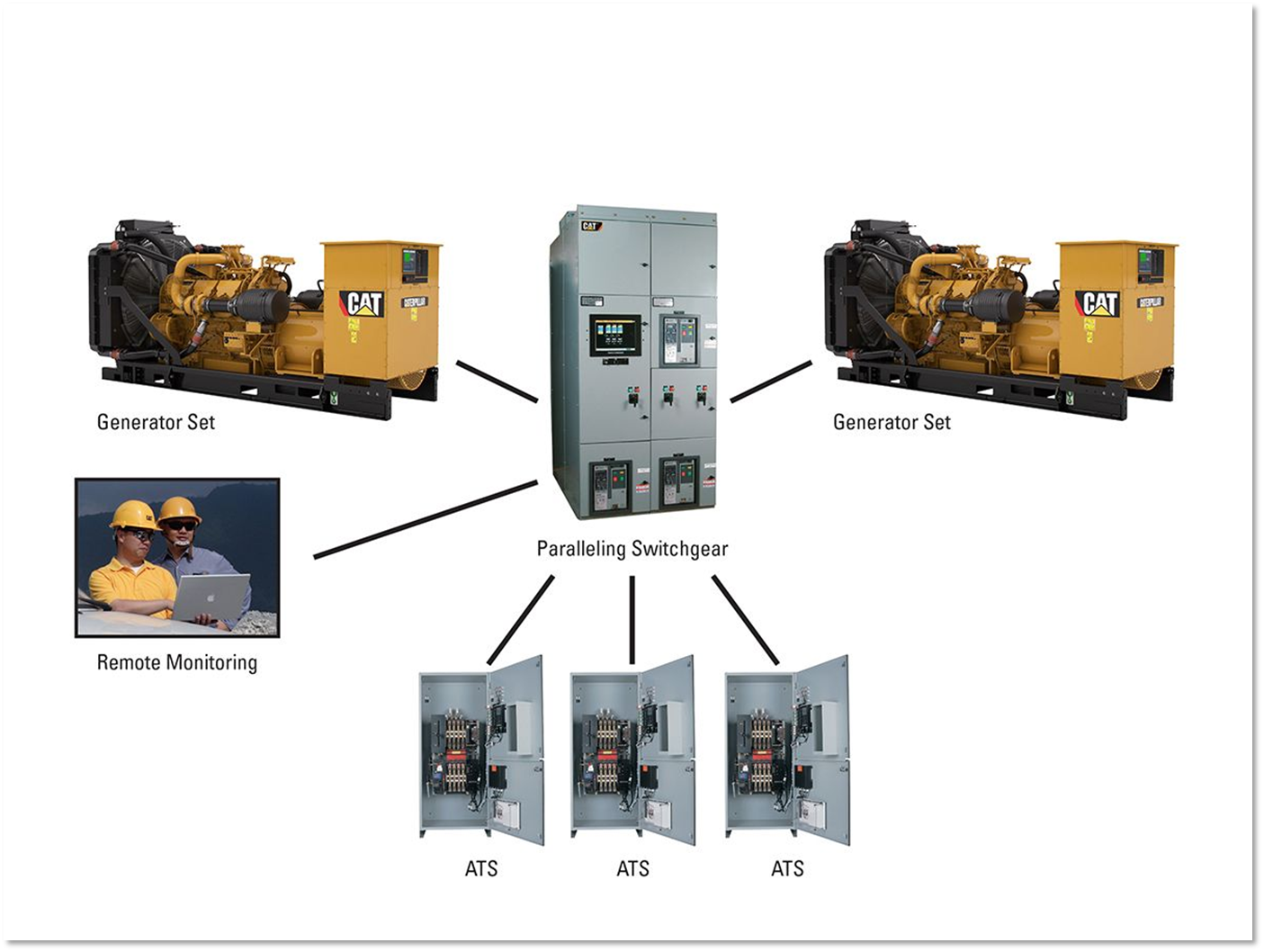
Below is a simple breakdown of the essential power system components and how they connect through one central hub: paralleling switchgear.
Generator Sets: The Core Power System Component
Generator sets are the power system components responsible for producing electricity when utility power fails or when additional capacity is required. They are the backbone of any backup power system.
In many commercial and industrial applications, multiple generator sets are used together to improve reliability and performance. When connected through paralleling switchgear, generator sets can:
- Start automatically during a power event
- Share load between multiple units
- Scale output up or down based on demand
- Provide redundancy for critical operations
Together, these capabilities create a flexible and dependable power foundation.
Paralleling Switchgear: The Heart of the System
If generator sets supply the power, paralleling switchgear is the power system component that makes everything work together.
Paralleling switchgear serves as the command center by:
- Controlling and coordinating multiple generators
- Ensuring each unit is properly synchronized before connection
- Balancing electrical load across all available generators
- Automatically adjusting which generators are running based on demand
By linking generator sets, automatic transfer switches, and monitoring systems, paralleling switchgear turns individual power system components into a fully integrated power solution.
Automatic Transfer Switches (ATS): The Fast Acting Switch
Automatic Transfer Switches (ATS) are critical power system components that ensure a fast, seamless response when utility power becomes unstable.
Each ATS continuously monitors incoming utility power and reacts immediately when a problem occurs. ATS units are designed to:
- Detect power loss or voltage fluctuations
- Signal the generator system to start
- Transfer building loads to generator power
- Switch back to utility power once stability is restored
Multiple ATS units can connect to the same paralleling switchgear lineup, allowing different areas of a facility to be protected and controlled independently.
Remote Monitoring: Visibility Across All Power System Components
Remote monitoring adds insight and confidence to your power system by providing real-time visibility into how all power system components are performing.
With remote monitoring, you gain access to:
- Live generator and system status
- Alerts and notifications
- Start and stop controls
- Load and performance data
- Maintenance and service insights
Whether you’re onsite or offsite, remote monitoring keeps you connected to your power system and helps ensure issues are identified early.
How Components Work Together
In a fully integrated power system:
- Multiple generator sets feed into a central paralleling switchgear lineup
- Several ATS units connect to that same switchgear, ready to transfer load instantly
- Remote monitoring ties all power system components together with complete visibility
Each component serves a distinct purpose, but when connected through paralleling switchgear, they operate as one coordinated system. This integration is what ensures consistent, reliable power, even in demanding conditions.
Why Understanding Power System Components Matters
Knowing how your power system components work together helps you make informed decisions about system design, maintenance, and long-term reliability. A properly integrated power system supports uptime, protects critical operations, and provides confidence when utility power is unavailable. Contact our team today for more information.